 +91 9544 22 11 55
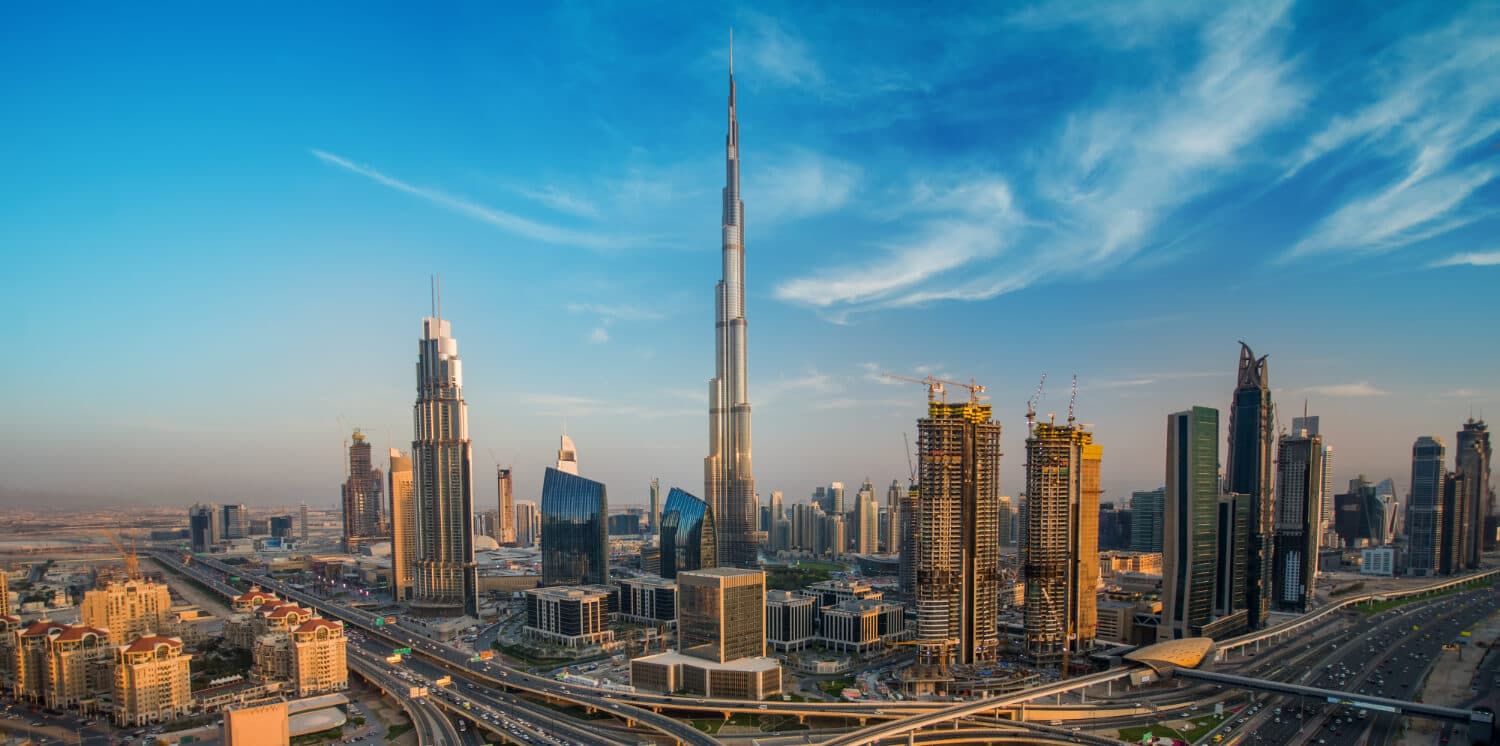
Dubai is a dynamic global metropolis, renowned for its striking modern architecture, luxurious lifestyle, and relentless pursuit of innovation. Its culture, while deeply rooted in Islamic and Emirati traditions, is remarkably cosmopolitan, home to over 200 nationalities, with expatriates forming the vast majority of its population. This unique blend fosters a truly multicultural environment, offering diverse culinary experiences, festivals, and social interactions looking to the future. Dubai is guided by its ambitious "D33 Economic Agenda," aiming to double its economy by 2033. This involves significant investments in cutting-edge sectors like AI, advanced manufacturing, and green technology, alongside a drive to attract top global talent and become a leading smart city. Recent agreements, such as the numerous Comprehensive Economic Partnership Agreements (CEPAs) with countries including India, Turkey, and Azerbaijan, are expanding its trade networks and economic partnerships globally, cementing its role as a vital international trade and logistics hub. This strategic vision positions Dubai not just as a thriving present-day city, but as a proactive shaper of tomorrow's global landscape.
 Dubai is internationally renowned for its record-breaking architecture and world-class attractions such as the Burj Khalifa, Palm Jumeirah, Dubai Mall, and Dubai Frame. At the same time, while Islam is the official religion, the city is widely recognised for its openness, religious tolerance, and multicultural environment, where people from diverse nationalities, cultures, and faiths live and work together harmoniously.Trade and Tourism: A primary economic driver, attracting millions of visitors.Real Estate and Construction: Known for luxury developments and ambitious projects.Logistics and Aviation: Home to world-class ports and air cargo hubs.Financial Services: A significant regional financial centre (DIFC).Technology and Innovation: Growing focus on AI, blockchain, and e-commerce.Healthcare and Education: Significant investments and development in these sectors.Future Innovations: Dubai is actively pursuing futuristic projects, such as the planned launch of city-wide flying taxi services by 2026.
Dubai is rapidly cementing its reputation as a premier global education hub, attracting international students with over 60 world-renowned university campuses offering diverse, high-quality programmes. Pursue a world-class degree here to significantly advance your global career prospects. The city boasts a vibrant, multicultural environment, fostering invaluable networking and cross-cultural understanding. Dubai's continuous development as an innovation hub, particularly in AI, sustainability, and fintech, ensures students are exposed to cutting-edge industries. Recent updates confirm new branch campuses, including India's IIM Ahmedabad and Lebanon's American University of Beirut for the 2025/26 academic year. Streamlined student visa processes and an emphasis on research further enhance Dubai's appeal for a globally advanced career.

Dubai hosts branch campuses of top universities from the UK, USA, Australia, and Europe, offering globally recognised degrees

A truly global city with over 200 nationalities, giving Indian students rich cross-cultural exposure and networking opportunities

English is the primary language of instruction and daily communication, ensuring easy academic and social integration

One of the world’s safest cities, featuring low crime rates, modern infrastructure, and excellent public amenities

Strategic location between Asia, Europe, and Africa allows easy travel to India and global destinations

Competitive tuition fees, manageable living costs, and multiple scholarship opportunities for international students

Fast-growing, innovation-driven economy with strong opportunities in AI, fintech, and renewable energy sectors

Clear post-study work pathways with employer-sponsored work visas in high-demand sectors
 To work legally, students require a work permit issued by the UAE Ministry of Human Resources and Emiratisation (MoHRE). This permit allows them to work up to 20 hours per week during regular academic sessions and up to 40 hours per week during vacations and university holidays. Furthermore, their university must provide a formal letter stating they have no objection to them working part-time, ensuring that such work does not interfere with their studies.A significant advantage is that income earned from part-time or full time jobs in Dubai is generally tax-free.If international students achieve a GPA of 3.5 or above, they can be eligible for the UAE Golden Visa (10 years renewable visa).No national sponsor is needed, and a Golden Visa holder can readily sponsor their family, including spouse and children of all ages, under this visa.Field of Study: AI, ML, Cyber security, Big Data, Epidemiology and Virology, Computer Engg, Software Engg, Electronic and Electrical Engg, Biotechnology, Genetics and Molecular Engg and other STEM fields.
January / May / September

Dubai offers a high-quality, internationally recognised education system, a safe and multicultural environment, excellent career opportunities, and a favourable tax regime upon graduation.
Yes, many universities in Dubai are either branches of prestigious international institutions (e.g., UK, France, Malta US and Australian universities) or locally established universities with international accreditation.
Most programmes are taught in English; admission is possible with or without IELTS.
The process is generally straightforward once admitted to a recognised institution. The university often assists with the visa application, but all documents must be accurate and complete.
You'll typically need a valid passport, university acceptance letter, proof of sufficient funds, academic transcripts, a medical fitness certificate, and passport-sized photographs.
Yes, international students can work part-time (up to 20 hours per week during term and 40 hours during holidays) with a valid work permit issued by the Ministry of Human Resources and Emiratisation (MoHRE).
Absolutely. Your university must provide a formal NOC stating they have no objection to you working part-time, ensuring it doesn't interfere with your studies.
Generally, your employer will initiate the work permit application through MoHRE on your behalf once you have secured a job offer and the university's NOC university team will assist the all process.
Common roles include retail sales associate, customer service, hospitality staff, data entry, and sometimes on-campus positions like library or administrative assistants.
Excluding tuition, a single student might expect to spend approximately AED 2,000 - 3,000 per month, depending on accommodation choices and lifestyle.
Tuition fees vary widely by university and programme, but compared to some Western countries, many institutions in Dubai offer competitive fees and scholarships especially considering the quality of education.
Yes, many universities offer merit-based scholarships, partial tuition waivers, up to 55% and sometimes fully funded programmes, particularly for postgraduate studies.
The best approach is to check the official websites of individual universities, as most scholarships are institution-specific.
Options include university-managed dormitories, purpose-built student housing (e.g., KSK Homes, The Myriad), or private shared apartments.
Dubai is renowned for its very low crime rate and is considered one of the safest cities globally, offering a secure environment for international students.
Dubai boasts an excellent public transport network, including the Metro, buses, and trams. Students can often avail themselves of concessions with a Nol Blue Card.
Business Administration, Engineering, Information Technology, Finance, Hospitality Management, and Media & Communication are consistently popular choices due to demand in the UAE job market.
Yes, the UAE offers a "Post-Graduate Work Permit" of up to two years, allowing graduates to seek employment. Successful job offers lead to employment visa sponsorship.
Dubai's growing economy offers strong prospects in sectors like finance, IT, tourism, logistics, construction, and healthcare, particularly within its many free zones.
Most universities provide comprehensive placement support services, including CV workshops, interview preparation, internship placements, and networking events to aid job searching.